
By Lonni Summers, NCSC Senior Court Management Consultant
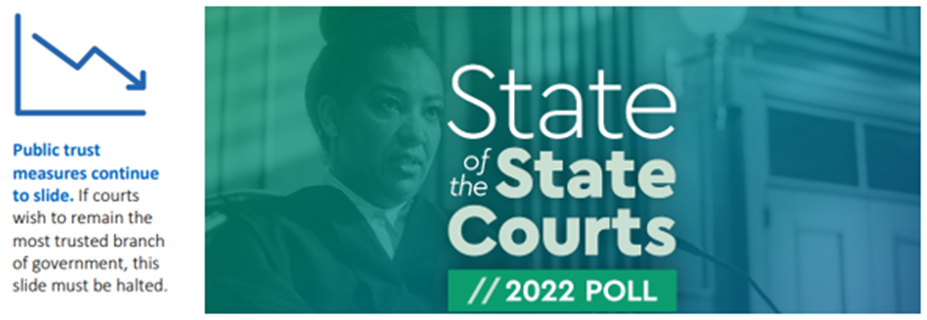
Public trust and confidence in the courts continues to decline as the public loses faith in the court’s ability to deliver equal justice for all. The National Center for State Courts’ 2022 State of the State Courts poll reminds us that “most Americans are not focused on the court system in their daily lives and have only the most rudimentary understanding of how these systems work.”[1]
People often don’t think about the courts at all unless they become involved in a court case. Thanks to television and movies, many people expect to have counsel appointed if they cannot afford it. They are surprised to find out that there is no right to counsel in most civil matters.
How can courts stop the slide?
One important way that courts can enhance public trust in the system is to increase the public’s knowledge of how courts operate and how decisions are made. Plain language and clear communication can help convey these important messages. Offering information in a way that everyone can understand helps improve the public’s perception of fairness.
It’s not what you say, it’s how you say it.
Simplicity, clarity, and transparency are essential to promoting public trust and confidence in the courts. Plain language and clear communication are key components of procedural fairness. Courts should offer excellent customer service, be transparent, and make it easy for regular people—non-lawyers—to use the courts.
Clear communication is key.
Respect and dignity are crucial components of procedural fairness. People feel disrespected when they are served with court papers that contain a wall of legal jargon that they can’t understand.
Easy to read court forms, orders, and other court materials help the public use courts effectively and enhance access to justice. Clear communication can help courts demonstrate respect for individual rights.
Communication Principles
- Communicate directly using direct, simple, and consistent terms.
- Use design to engage users.
- Make sure materials are accessible.
- Ask for feedback.
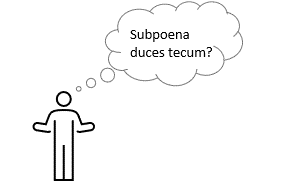
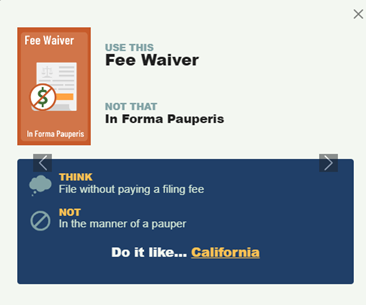
Plain language is clear, direct, and can be understood by all. Many legal terms are confusing and overly complicated. Arrears, in forma pauperis, and replevin are examples of terms that members of the public are unlikely to understand. NCSC’s Plain Language Glossary contains examples of plain language legal terms that courts use effectively. If you can’t find a plain language alternative, include a definition in the text.
Before you write, research the literacy rate in your jurisdiction. If you’re not sure, aim for a reading grade level of 6th or below.
Use design to engage users. Choose a basic font, such as Arial or Calibri. Use headings and white space to break up large blocks of text. Visual elements such as icons and graphics can help illustrate important concepts.


Make sure materials are accessible to individuals with disabilities and limited English proficiency.
The American Foundation for the Blind reports that more than 32 million Americans are blind or have trouble seeing, even with glasses or contact lenses. Use a large font and high contrast colors to ensure written content is accessible to all.
Avoid colors like red and green that can be difficult to distinguish for individuals with color blindness.
Make sure pictures and graphics contain alternative text, or “alt text.” Alt text is a description of the picture or graphic that can be read aloud by a screen reader.

Alt Text: Person in wheelchair with solid fill
Translate content into multiple languages. Providing content in multiple languages enhances understanding and shows respect for litigants with limited English proficiency (LEP). Use the US Census Language Use Data to research which languages are the most common in your area.
Ask for feedback. How do you know if your jurisdiction is meeting the needs of court users? Ask! Do user testing and survey court users to find out about their experiences. The mere act of asking for feedback helps build trust.
Resources:
NCSC plain language page: https://www.ncsc.org/consulting-and-research/areas-of-expertise/access-to-justice/plain-language
NCSC’s Plain Language Glossary: https://www.ncsc.org/consulting-and-research/areas-of-expertise/access-to-justice/plain-language/glossary
Forms Camp – Free training on plain language, design, accessibility, user testing, and more: https://www.ncsc.org/consulting-and-research/areas-of-expertise/access-to-justice/winter-camp/forms-camp
Best Practices for Creating Legal Self-Help Materials: https://www.ncsc.org/__data/assets/pdf_file/0029/88652/Best-Practices-for-Creating-Legal-Self-Help-Materials.pdf
Want to learn more? Connect with Lonni Summers at lsummers@ncsc.org.
[1] NCSC State of the State Courts (2022): https://www.ncsc.org/consulting-and-research/areas-of-expertise/court-leadership/state-of-the-state-courts
 Procedural Fairness For Courts and Judges